Co-authored by Jessica Meaney (Investing in Place), Rudy Espinoza (Inclusive Action for the City), and John Yi (Los Angeles Walks)
This week, Los Angeles policymakers are considering recommendations related to bus shelters, public toilets, digital advertising panels, and other amenities in the public right-of-way.
While these discussions may seem technical, they raise a much larger question:
What is the City’s vision for its sidewalks?
Currently, Los Angeles has no guiding policy or set of metrics for developing a walkable and rollable city with vibrant, inclusive sidewalks that serve multiple needs and community uses.
The City’s primary sidewalk program stems from the Willits settlement, a disability rights lawsuit focused on repairing damaged sidewalks and improving accessibility. While that work is important, compliance alone will not create the kind of public spaces Angelenos deserve.
The challenge is much larger.
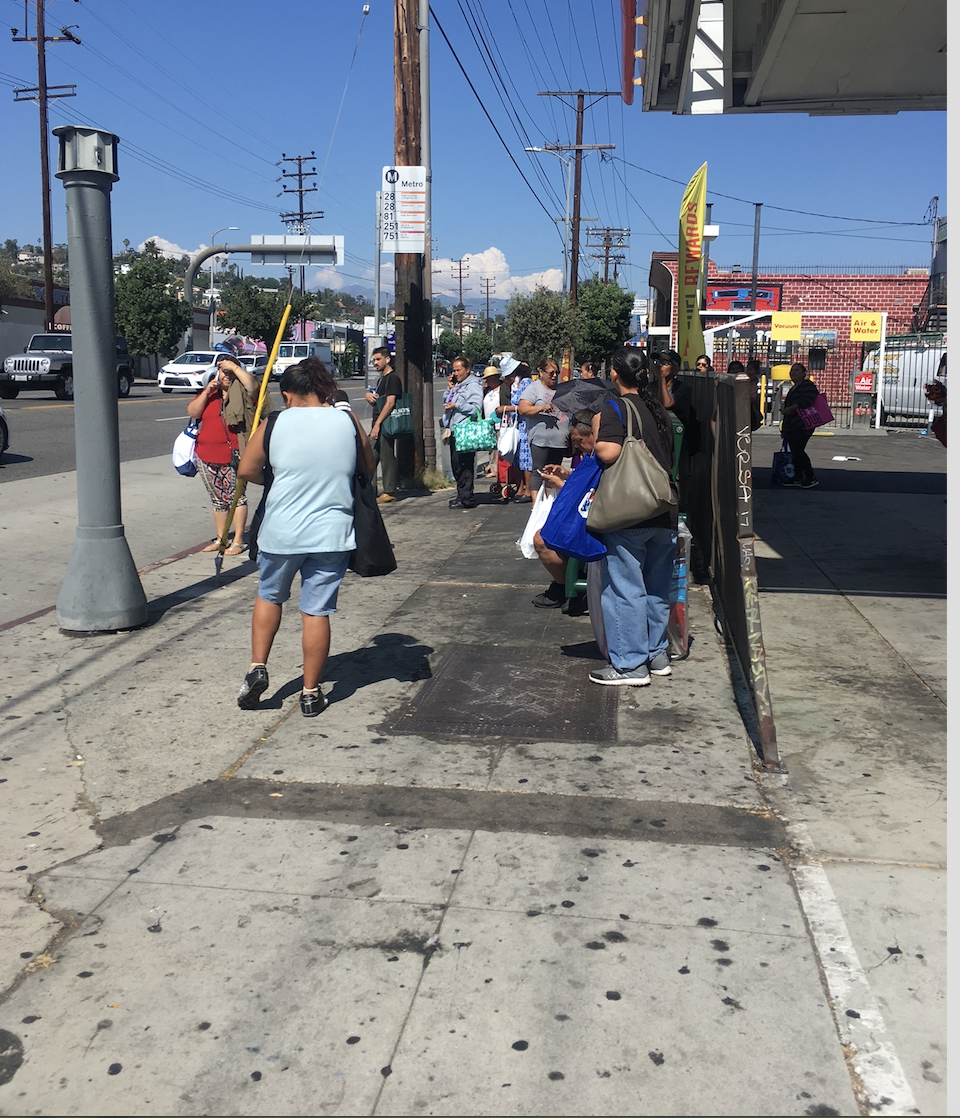
Sidewalks are some of Los Angeles’ most important public spaces. They serve many purposes and many users. They provide access to schools, transit, parks, jobs, healthcare, and local businesses. They are places where people walk, roll, wait for the bus, sell food, gather, and move through daily life.
Yet policy decisions affecting sidewalks are often made independently of one another.
Street vending, bus shelters, street trees, accessibility improvements, public bathrooms, homelessness, and sidewalk repairs are frequently addressed as separate issues rather than as part of a larger vision for the public right-of-way.
At the same time, Los Angeles continues to struggle with aging and deteriorating infrastructure. Thousands of miles of sidewalks remain in disrepair, many bus stops lack shelters and shade, and residents continue to advocate for safer, more accessible public spaces.
This is why we believe the City must first establish a guiding vision for its sidewalks and public right-of-way.
That vision should recognize sidewalks as shared public spaces that serve many functions and many communities. It should provide clear priorities, measurable outcomes, and direction for City departments making decisions about the public realm.
Without a unifying vision, Los Angeles will continue to make fragmented decisions that fail to address the broader needs of residents.
As policymakers consider future investments and policies, the goal should not simply be to generate revenue or approve individual projects. The goal should be to create sidewalks that are accessible, safe, welcoming, and responsive to the diverse needs of Angelenos.
Los Angeles deserves sidewalks that reflect the importance of the public spaces we share.