After several years of litigation, the City of Los Angeles has agreed to repair the city’s broken sidewalks and improve accessibility for all. The legal settlement represents the largest disability access settlement of its kind in the country and calls for the City to invest more than $1 billion in sidewalk repairs and accessibility improvements over the coming decades.
The agreement requires the City to develop a citywide sidewalk repair program and begin implementing a long-term plan to address the condition of Los Angeles’ sidewalk network. (For additional background, see coverage from the Los Angeles Times and the Legal Aid Foundation of Los Angeles.)
The next step is developing a work plan and prioritization process. The City currently has more than $27 million budgeted to begin this effort, though the long-term funding strategy has not yet been identified. The settlement also requires ongoing oversight, including regular reporting on the City’s progress.
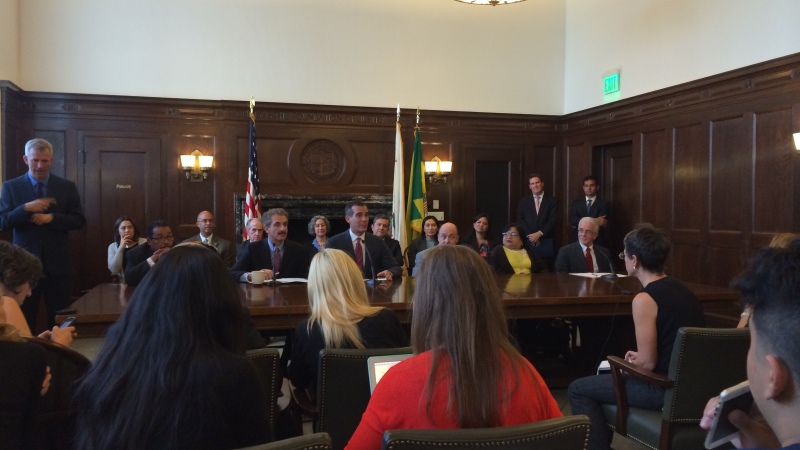
City of Los Angeles announces settlement on ADA lawsuit to fix LA sidewalks, April 1, 2015.
With more than 10,000 miles of sidewalks across Los Angeles, an inventory and prioritization process will be essential. A citywide strategic plan should identify needs, establish performance measures, and guide investment decisions over time. Data related to social equity, public health, safety, and accessibility should play an important role in determining priorities and ensuring investments reach communities with the greatest needs.
A clear and well-documented plan will also help the City compete for federal, state, and regional transportation funding to accelerate repairs and improvements.
Project delivery, transparency, and coordination with other transportation investments will be equally important. While the settlement establishes a 30-year commitment, Los Angeles should explore opportunities to accelerate implementation. Metro’s 30/10 initiative offers one example of how long-term infrastructure programs can be delivered more quickly through strategic planning and financing.
At the same time, the City faces broader challenges in delivering transportation projects. During discussions at the Street Transportation Project Oversight Committee and Transportation Committee in 2014, staff identified a significant backlog of walking, bicycling, and Safe Routes to School projects awaiting implementation. These projects, funded through federal, state, and Metro programs, represent substantial investments that have yet to be delivered.
It is encouraging to see Los Angeles commit to repairing its sidewalks and improving conditions for people walking and using transit. As the City advances its draft Mobility Plan and other transportation initiatives, it will be critical to align funding, project delivery, and implementation with those policy goals.
The settlement is an important first step. The challenge now is ensuring that Los Angeles has the planning, funding, and delivery systems necessary to turn that commitment into lasting improvements for residents across the city.