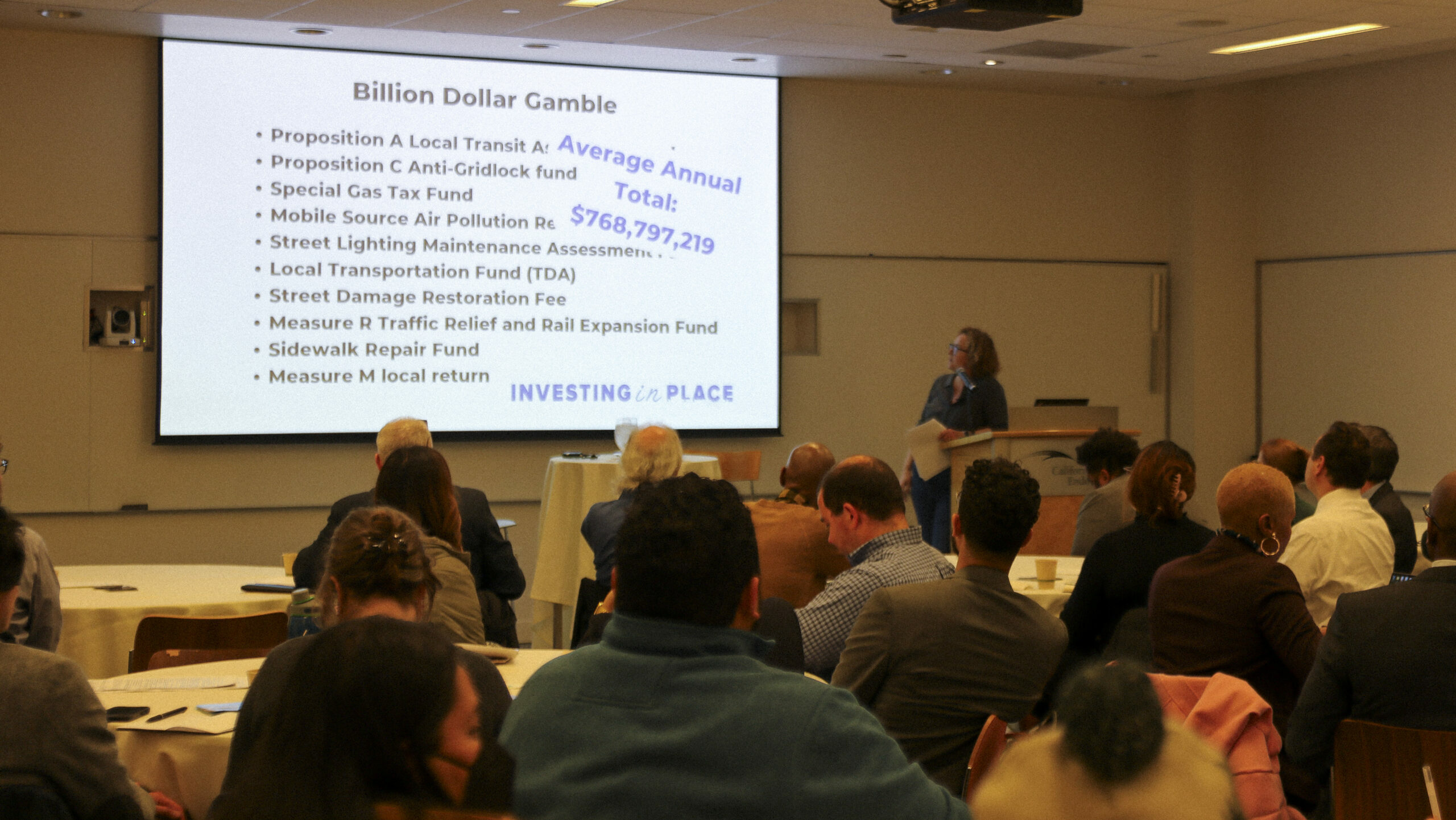
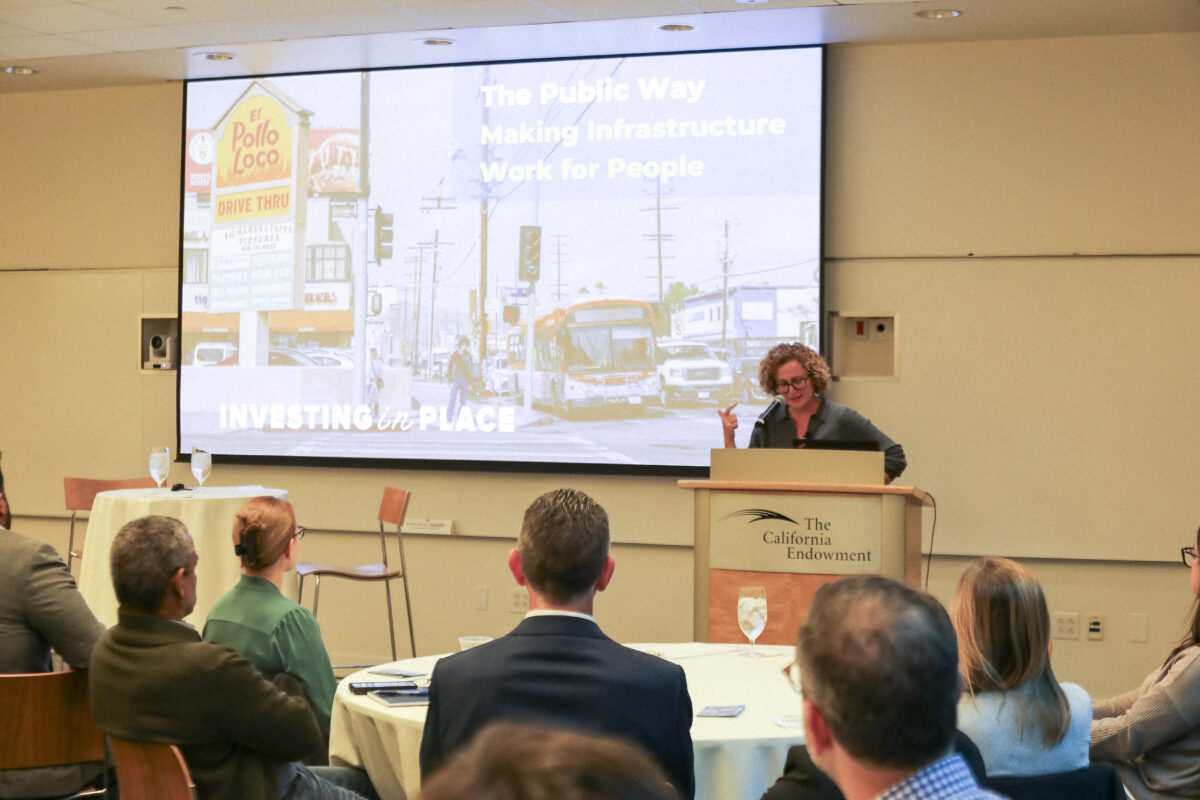
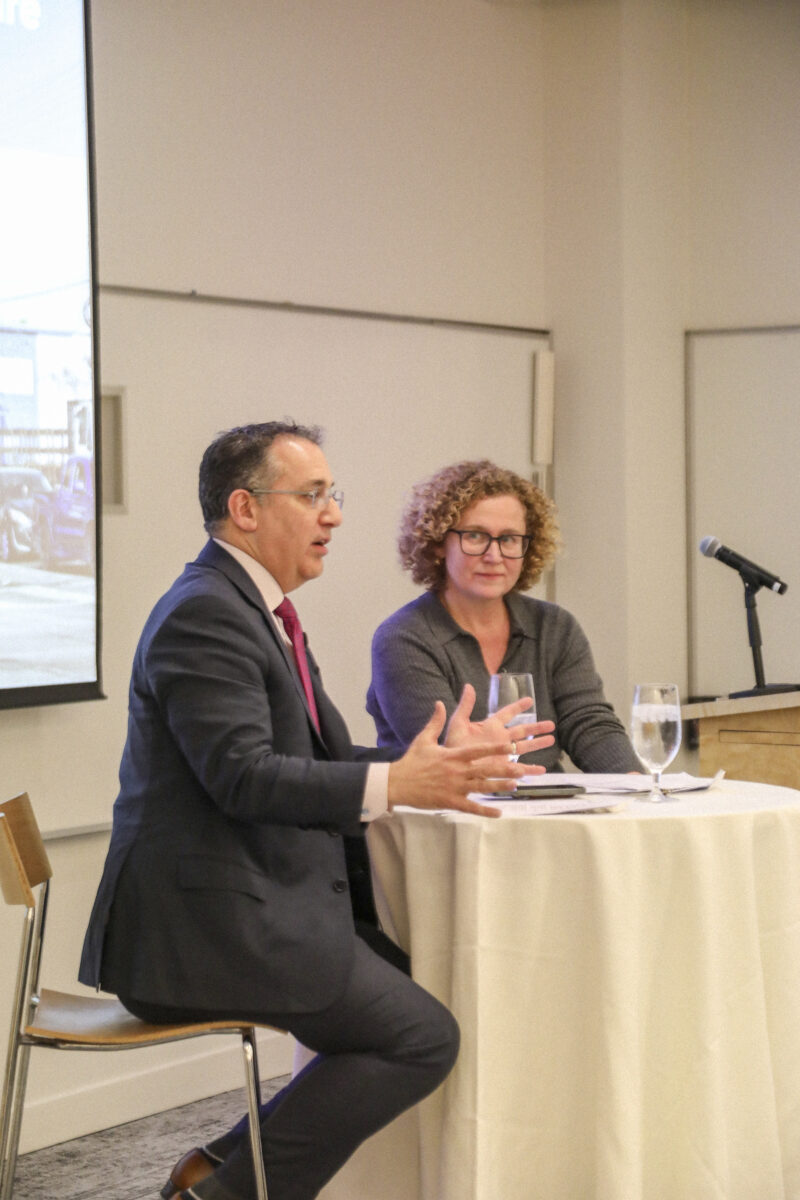
More than 90 civic leaders gathered with Investing in Place this month for a conversation about one of Los Angeles’ biggest challenges: how to better plan, fund, and manage public infrastructure.
Participants included public agency staff, elected officials, researchers, business leaders, community organizations, and residents. While they brought different experiences and perspectives, a common theme emerged throughout the discussion:
Los Angeles cannot effectively manage its infrastructure without a shared plan.
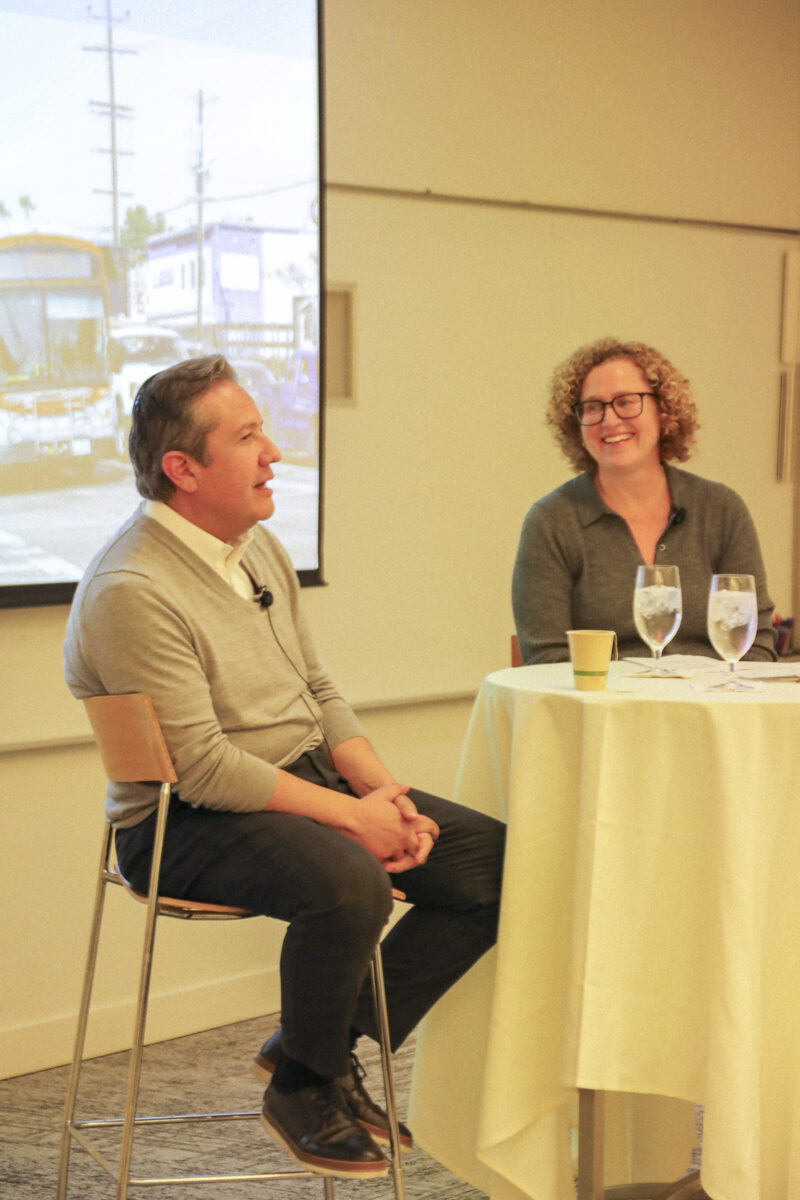
Former City Administrative Officer Miguel Santana reflected on the City’s fiscal challenges and the consequences of making major infrastructure decisions without a long-term framework.
“A plan helps you define what’s most important,” he told attendees. Before decisions about budgets and priorities can be made, communities need a shared vision of what they want their city to become.
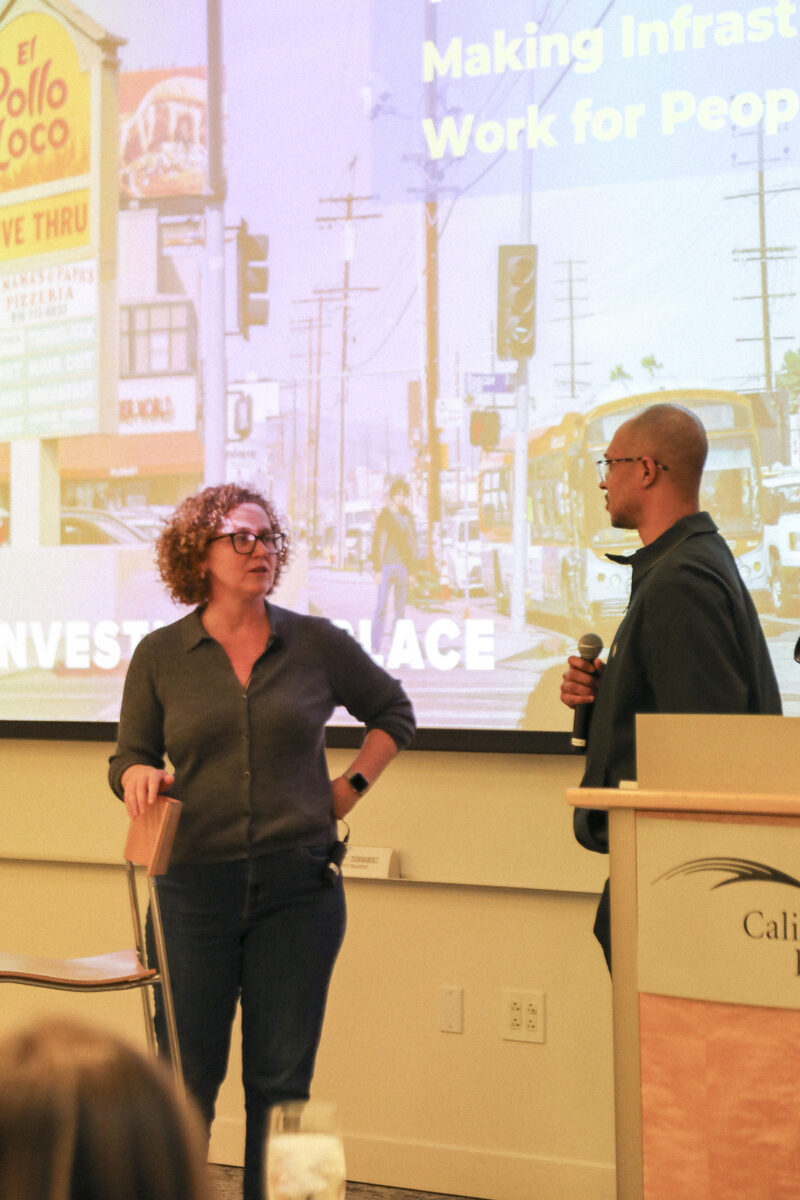
Jason Foster, CEO of Destination Crenshaw, spoke about the importance of community ownership and participation in shaping public investments.
“We own the public right-of-way as taxpayers and voters,” he said. Public infrastructure works best when communities see themselves reflected in the decisions being made around them.
Councilmember Bob Blumenfield discussed the realities of funding infrastructure in Los Angeles, including decades of deferred maintenance and revenue streams that have not kept pace with growing needs.
Yet despite the challenges, the conversation remained focused on possibility.
Throughout the afternoon, speakers returned to a similar idea: Los Angeles has tackled difficult infrastructure challenges before. Progress requires leadership, coordination, and a willingness to think beyond the next budget cycle.
For Investing in Place, the discussion reinforced why a Capital Infrastructure Program remains so important.
A citywide plan helps establish priorities, coordinate investments, improve transparency, and create a shared framework for making decisions about public assets. Without one, infrastructure decisions become fragmented, reactive, and harder for the public to understand.







You must be logged in to post a comment.