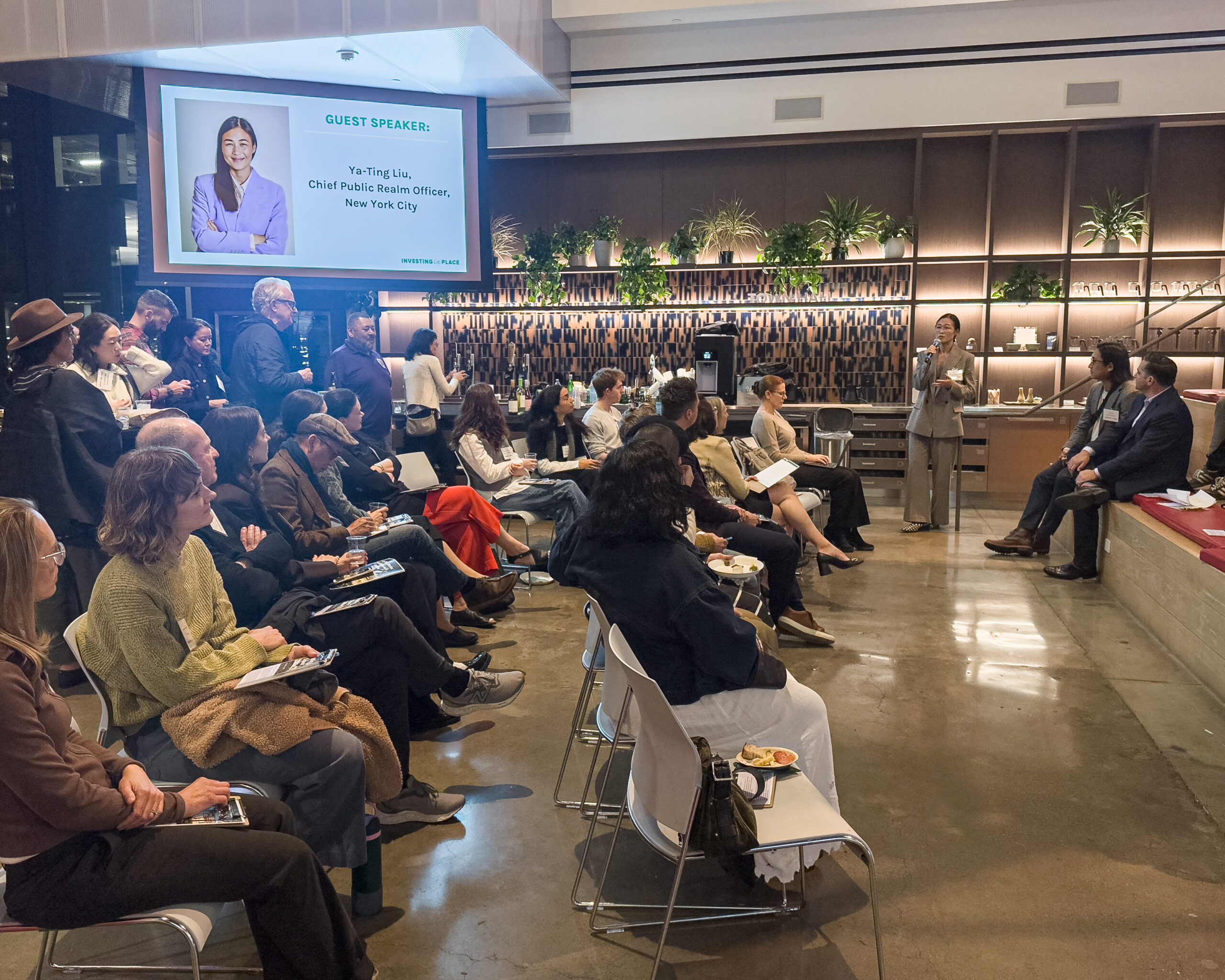
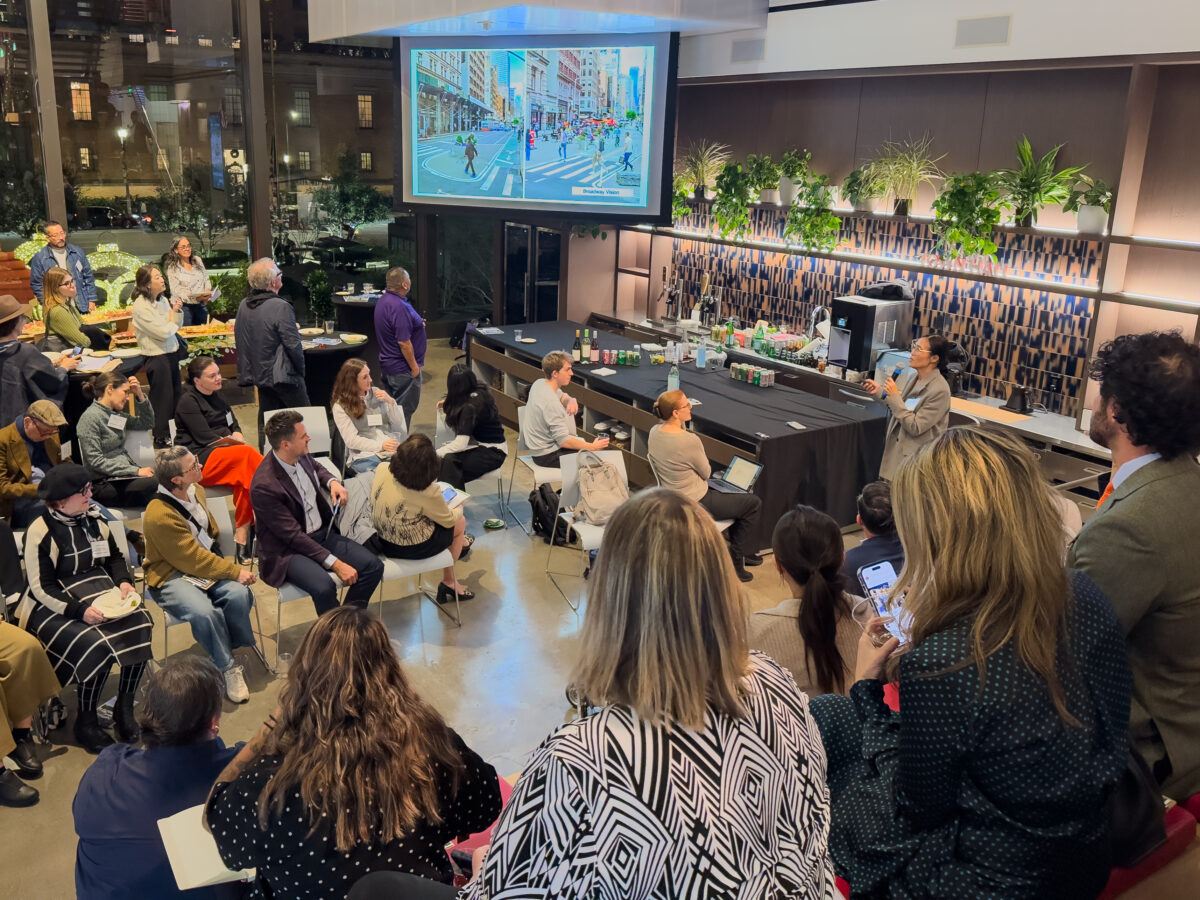
Last month, Investing in Place convened 75 civic leaders from government, philanthropy, design, business, and community organizations for the first of our Public Space Salons.
The evening centered on a simple idea: public space is civic infrastructure.
Sidewalks, streets, parks, trees, and other shared public assets shape daily life in Los Angeles. Yet responsibility for planning, funding, maintaining, and improving these assets remains fragmented across departments, budgets, and decision-making processes.
One of the highlights of the evening was a conversation with Ya-Ting Liu, New York City’s first Chief Public Realm Officer.
Ya-Ting shared lessons from New York City’s efforts to better coordinate public space across agencies and create clearer accountability for the public realm. Her role was created because civic leaders, advocates, businesses, and public officials recognized that public space required dedicated leadership and long-term stewardship.
Her experience offered both inspiration and practical lessons for Los Angeles as local leaders consider Charter Reform, a Capital Infrastructure Program, and new approaches to governing the public realm.
The conversation reinforced something Investing in Place has increasingly focused on over the last several years: public space challenges are often governance challenges.
Questions about sidewalks, parks, trees, accessibility, maintenance, and public investment are ultimately questions about accountability, coordination, priorities, and leadership.
The salon also brought together people who do not often find themselves in the same room. Participants shared perspectives from government, philanthropy, design, community organizations, and business, helping build a broader understanding of what it will take to better care for Los Angeles’ public realm.
As Charter Reform discussions continue, Investing in Place will continue researching, convening, and contributing ideas about how Los Angeles can create the systems needed to care for its public spaces over the long term.
Because public space is not an amenity.
It is civic infrastructure.








You must be logged in to post a comment.