If you see something, say something.
That’s what we’re taught. Notice a hazard? Report it. Help fix the problem.
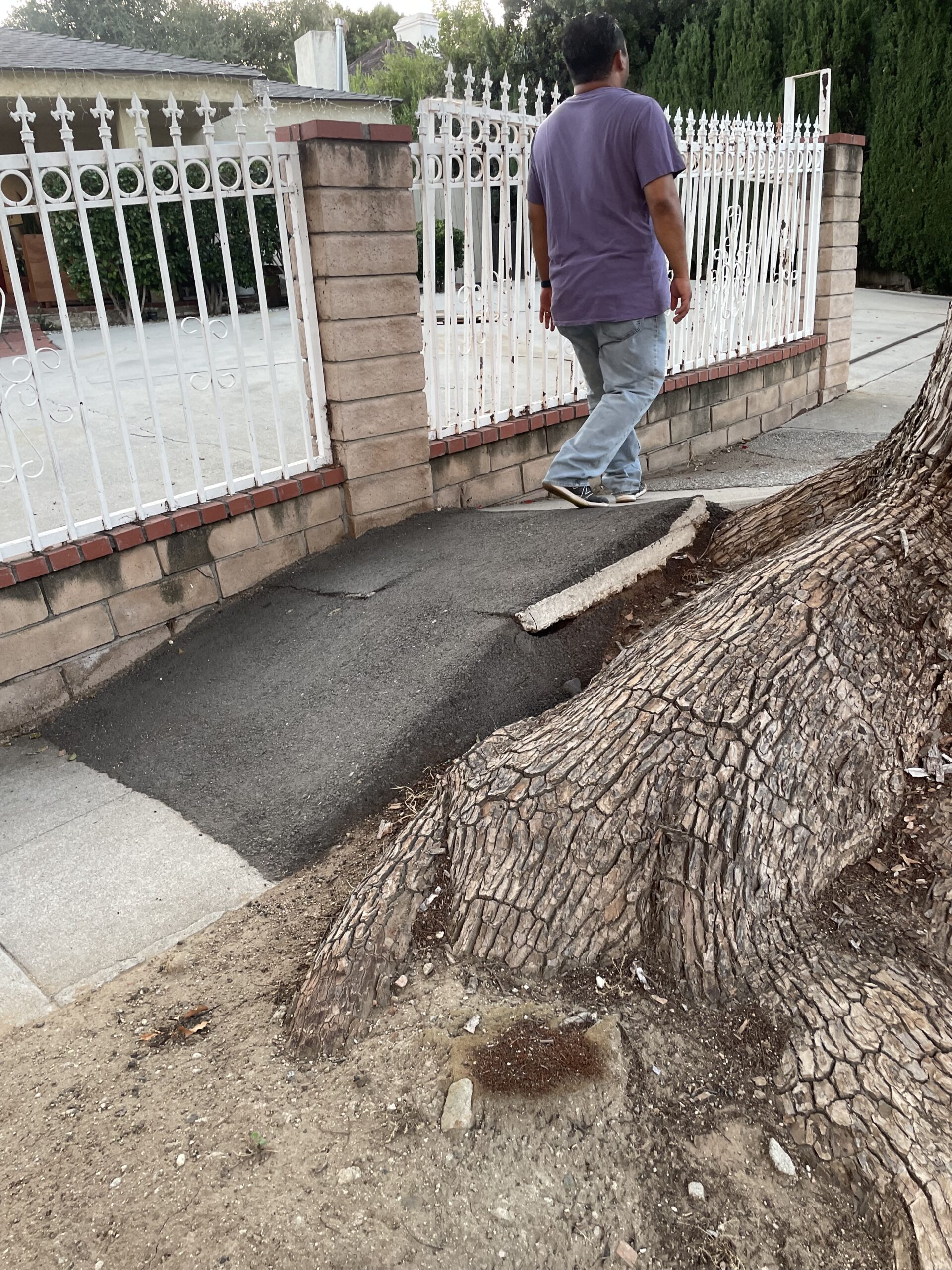
Now imagine you see people repeatedly tripping over the same broken sidewalk in your neighborhood. You watch someone using a wheelchair leave the sidewalk entirely because a missing curb ramp blocks their path. You decide to report the problem through the City’s 311 system.
Your request is received.
Estimated wait time: more than 10 years.
Does that sound like a functional city?
Los Angeles has one of the largest sidewalk networks in the United States, with roughly 9,000 to 10,000 miles of sidewalks connecting neighborhoods across the city. Yet according to a 2021 Controller audit, more than half of that network is broken or in disrepair.
That’s more than 5,000 miles of damaged sidewalks.
To be fair, managing a network of this size is a significant challenge. But Los Angeles has not had a comprehensive sidewalk program since the 1970s. Decades of deferred maintenance have allowed small problems to become large ones.
The consequences are visible throughout the city. Broken sidewalks make it harder for older adults, people with disabilities, parents pushing strollers, and anyone walking to safely move through their neighborhoods. Accessibility improvements remain backlogged. Basic maintenance often happens years after problems are reported.
The challenge is made even more difficult by how responsibility is structured.
California law places much of the responsibility for sidewalk maintenance on adjacent property owners. This has created a patchwork system where conditions vary widely from neighborhood to neighborhood. Wealthier communities are often better positioned to address repairs, while lower-income neighborhoods may struggle with the financial burden.
In 2016, Los Angeles entered into the largest ADA sidewalk settlement in the nation, committing $1.37 billion over 30 years to improve accessibility throughout the public right-of-way. Yet the scale of need continues to exceed the City’s current approach.
Sidewalks are more than infrastructure.
They connect people to schools, jobs, parks, transit, businesses, and one another. They are among the most heavily used public assets in Los Angeles, yet they often receive far less attention than roads and highways.
To understand why, we need to look at the City’s current sidewalk policy and why it has struggled to deliver results.
That’s where we’ll turn next.