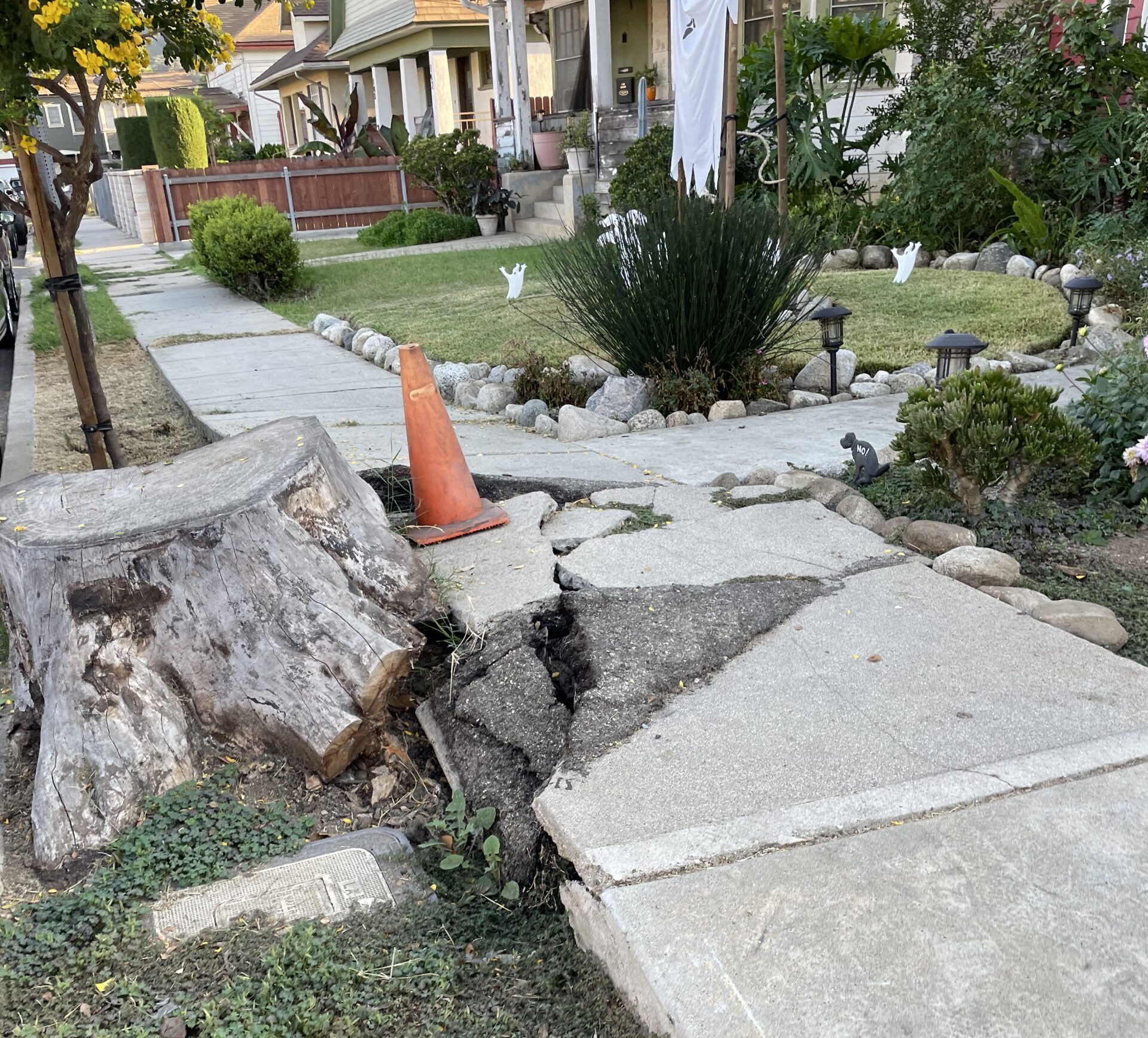
For nearly a decade, Los Angeles has relied on a sidewalk maintenance approach known as “Fix-and-Release.”
The idea sounds straightforward.
The City repairs a damaged sidewalk and then releases responsibility for future maintenance to the adjacent property owner.
In practice, the policy has not delivered the results many hoped for.
As of 2021, fewer than 5,000 properties had received release certificates, representing less than one percent of the City’s approximately 640,000 sidewalk parcels.
The challenge is that responsibility is divided in ways that make accountability difficult.
Property owners are generally responsible for maintaining sidewalks under state law. At the same time, the City remains responsible for ensuring accessibility under federal law. Yet Los Angeles has largely suspended enforcement of maintenance requirements while also struggling to repair sidewalks at the scale required.
The result is a system where neither the City nor property owners are effectively positioned to address the growing backlog.
Meanwhile, Los Angeles still lacks a complete inventory of sidewalk conditions and does not have a comprehensive long-term plan for addressing maintenance needs.
This matters because sidewalks are not optional infrastructure.
They are essential for mobility, accessibility, public health, and neighborhood quality of life. When they fall into disrepair, the consequences are felt most acutely by people with disabilities, older adults, children, and anyone who relies on walking or transit.
The limitations of Fix-and-Release point to a larger issue.
The challenge facing Los Angeles is not simply about repairing individual sidewalks. It is about creating a system capable of managing and maintaining one of the largest sidewalk networks in the country.
That requires looking beyond individual policies and asking a broader question:
Who is responsible for ensuring the entire system works?